

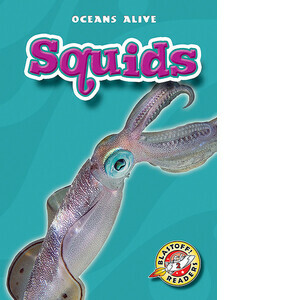
A squid has two gigantic eyes to see in dark places, eights arms for holding food, and a funnel for swimming! Young readers will get sucked in as they discover how squids eat, swim, and… More →
Premium Educational Books For Curious Young Readers


In Squirrel Kits in the Wild, beginning readers will learn about baby squirrels as they grow up and leave their nest. Follow along as squirrel kits learn to leave their nest. Vibrant,… More →

Fingers and toes grip branches, strong legs help with jump, and a long tail that helps this animal balance. What is this animal that's made to move through trees. It's a squirrel monkey!… More →

Did you know there are billions and billions of stars in the universe? They're grouped together as galaxies, including our very own spiral-shaped Milky Way galaxy! And did you know that… More →

It's time to explore space! Learn all about the history and science of stars and galaxies, all the way back to the beginning of time. Detailed diagrams and in-depth text along with backmatter More →

The stegosaurus is known for the row of tall plates that stick out of its back. But this dinosaur had many other fascinating traits! Using a pointed beak and long tail spikes, the stegosaurus More →

A dinosaur whips its spiked tail. What is this creature? It is a stegosaurus! In Stegosaurus, readers learn all about this dinosaur's appearance, behavior, and how it survived millions of… More →


In Stinky Animals, readers will learn about smelly animals, including stink bugs, skunks, and musk oxen. A comprehensive Why Are Some Animals Stinky? back matter feature highlights… More →

Did you know that there some famous animal astronauts? Or that bread is banned in space? Space may be a very serious place, but it's full of some really silly science! Learn about the totally More →

How much weight can an elephant carry? What animal has the strongest bite? In Strongest Animals, beginning readers are introduced to the strongest animals across a variety of classes and… More →

In the 1800s, Florida panthers thrived in the southeastern United States, but by the mid 1900s, there were very few of the animals left. When biologists like Mark Lotz realized that wildlife… More →